Featured
Table of Contents
Browsing Economic Variations in New York throughout 2026
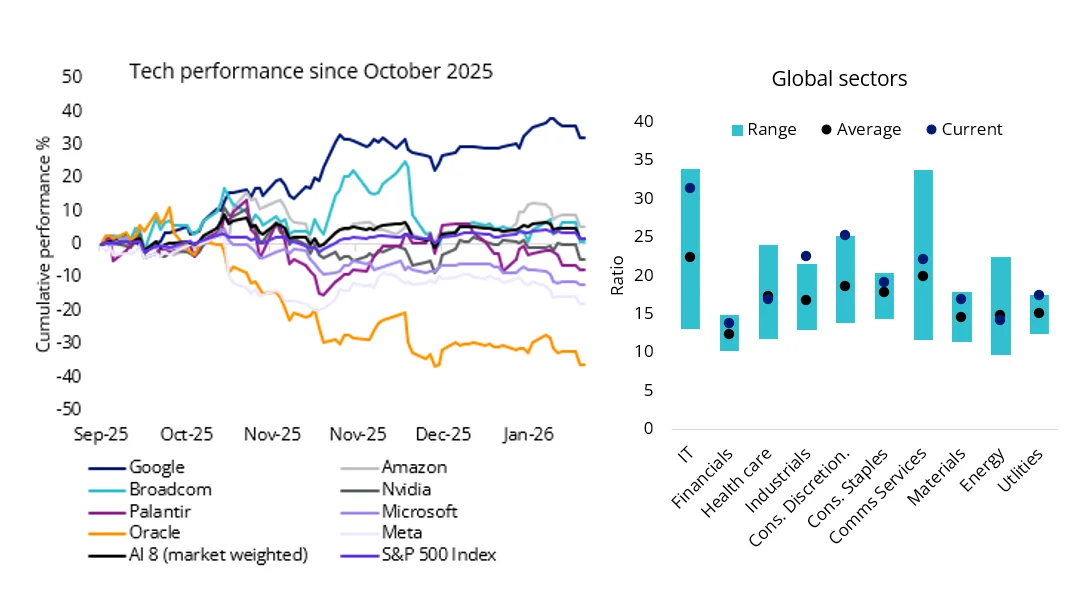
The financial environment of 2026 has presented a level of unpredictability that few B2B leaders anticipated even two years earlier. While some sectors show indications of fast expansion, others deal with a contraction driven by moving rates of interest and the cooling of venture capital in certain state-of-the-art niches. For organizations running within New York and across the surrounding region, the difficulty includes balancing aggressive development targets with a market that demands performance. The age of growth at any cost has ended, replaced by a focused requirement for measurable efficiency and high-intent lead generation.
A primary driver of this volatility is the maturation of expert system in the search sector. By 2026, standard online search engine have actually mainly transitioned into answer engines. This shift suggests that exposure is no longer simply about ranking in a list of links. It has to do with appearing within the generated summaries that offer direct answers to complex B2B queries. For business in New York, maintaining a presence in these generative outcomes is the difference in between a full sales pipeline and a stagnant quarter. Strategic financial investment in Paid Search provides a buffer versus these market swings, ensuring that a brand stays visible even as the mechanics of search continue to alter.
The Developing B2B Sales Cycle and Purchaser Intent
The B2B sales cycle in 2026 has extended considerably. Current data indicates that the average enterprise offer now includes twelve or more stakeholders, each requiring various layers of proof and data-backed reassurance. Purchasers are investing more time in the "dark social" phase-- looking into through personal neighborhoods, peer groups, and AI-driven chatbots-- long before they ever engage with a sales representative. This modification requires a digital presence that functions as a 24-hour expert instead of just a pamphlet. Organizations that focus on B2b Ppc That Fills Sales Pipelines have adapted by developing deep, authoritative content that answers technical concerns at every phase of the funnel.
Localized significance remains a cornerstone of this method. While the 2026 economy is global, the trust required to close large-scale business contracts typically originates from regional authority. Decision-makers in New York try to find partners who understand the particular regulatory and economic subtleties of the local territory. Establishing this authority involves a mix of localized search optimization and high-touch digital marketing that speaks with the special obstacles of the local market. Effective Paid Search Strategies now needs a mix of conventional intent analysis and real-time information processing to keep pace with these discerning buyers.
The Role of RankOS and AI Browse Exposure

Among the most considerable advancements in 2026 is the increase of Answer Engine Optimization (AEO) and Generative Experience Optimization (GEO) The RankOS platform has actually become a central tool for services aiming to track how their brand information is being pointed out by big language models and generative search user interfaces. Unlike conventional SEO, which tracks keywords, AI visibility focuses on entity relationships and topical authority. If an AI engine does not recognize a business as a leader in a particular niche, that company just will not appear in the generated answers provided to prospective clients.
Steve Morris, a frequent analyst on digital strategy in major service publications, has highlighted that the visibility gap is broadening. Business that disregarded the transition to AI search are now discovering themselves invisible to a generation of buyers who begin every search with a conversational prompt. The proprietary RankOS platform enables the monitoring of these citations, assisting firms in New York and other major markets like NYC, Chicago, and Los Angeles ensure their data is properly represented. Without this level of oversight, a brand threats being mischaracterized or neglected by the very engines that drive modern-day commerce.
Diversifying Digital Channels for Sturdy Growth
Economic volatility demands a varied method to digital acquisition. Relying on a single channel in 2026 is a dish for instability. Efficiency marketing, including PPC and paid social, has actually moved toward highly automated, algorithmic bidding. These systems need an enormous amount of first-party data to operate properly. Organizations that have ignored their data health are finding that their advertising expenses are increasing while their conversion rates drop. Those who have focused on B2b Ppc That Fills Sales Pipelines are seeing better returns by feeding their AI bidding designs with top quality lead information from the start.
Social network marketing in the B2B sector has actually also moved. Platforms that were as soon as seen as simply for brand awareness are now utilized for direct lead capture through incorporated ecommerce and lead-gen tools. The integration of ecommerce functionality into B2B platforms permits the smooth purchase of software-as-a-service or repeating consulting blocks, bypassing the traditional, friction-heavy sales procedure for smaller offer sizes. This fluidity is vital in a year where buyers are hesitant to devote to long, dragged out settlements for every single single service they require.
Efficiency Metrics in a Generative Economy
Determining success in 2026 needs more than just taking a look at natural traffic or click-through rates. The metric that matters most now is "share of model"-- the frequency and sentiment with which a brand is mentioned by generative AI online search engine. Because these engines frequently aggregate data from multiple sources, a company should guarantee its information is constant throughout website design, social profiles, and third-party review sites. Leaders who prioritize Paid Search for B2B Leads typically discover that their organic exposure recuperates quicker after online search engine updates due to the fact that they have built a structure of trust that spans the entire web.
In cities like Dallas, Atlanta, and Miami, the competition for search presence is particularly high. The digital agency design has actually progressed to meet this, offering multi-city assistance that bridges the space between regional SEO and nationwide brand authority. By preserving offices in major centers including Denver and Nashville, the group at the organization can offer localized insights that are frequently missed out on by firms with a single-region focus. This geographical breadth is a considerable advantage in an economy where local shifts can take place overnight.
Strategic Adjustment for Late 2026
As the year progresses, the companies that stay most resistant are those that treat their digital presence as a live, progressing asset rather than a set-and-forget project. This involves routine audits of AI visibility, consistent improvement of the sales funnel, and a willingness to pivot when economic data suggests a modification in purchaser behavior. The volatility of 2026 is not a momentary difficulty however a characteristic of a more fluid, AI-integrated market. Companies in New York that welcome this shift and usage tools like RankOS to handle their search presence will likely discover themselves in a much stronger position as they look towards 2027.
Success in this environment depends upon a deep understanding of the crossway between human intent and maker reasoning. While the technology has become more complex, the essential requirement for clear, reliable, and credible info stays the same. Whether it is through advanced SEO, advanced pay per click projects, or initial social media strategy, the goal is to be the answer to the purchaser's problem at the exact moment that problem emerges. For companies in the region, the path to scaling development in 2026 is paved with premium information and a commitment to visibility in the new search period.
The role of the CEO has likewise changed in this context. Figures like Steve Morris have actually demonstrated that management now involves a deep technical understanding of how digital systems communicate. It is no longer enough to entrust marketing to a siloed department; it needs to be incorporated into the core organization technique. When the economy is unpredictable, the brand that can plainly articulate its worth through every offered digital channel is the one that survives the recession and grows during the healing. This needs a sturdy structure that can hold up against the pressures of a fast-moving, AI-centric global market.

Latest Posts
Effective Local Outreach Frameworks for Impact
How CSR Boosts Children's Wellness Results
Building Strong Paths for Charitable Alliances